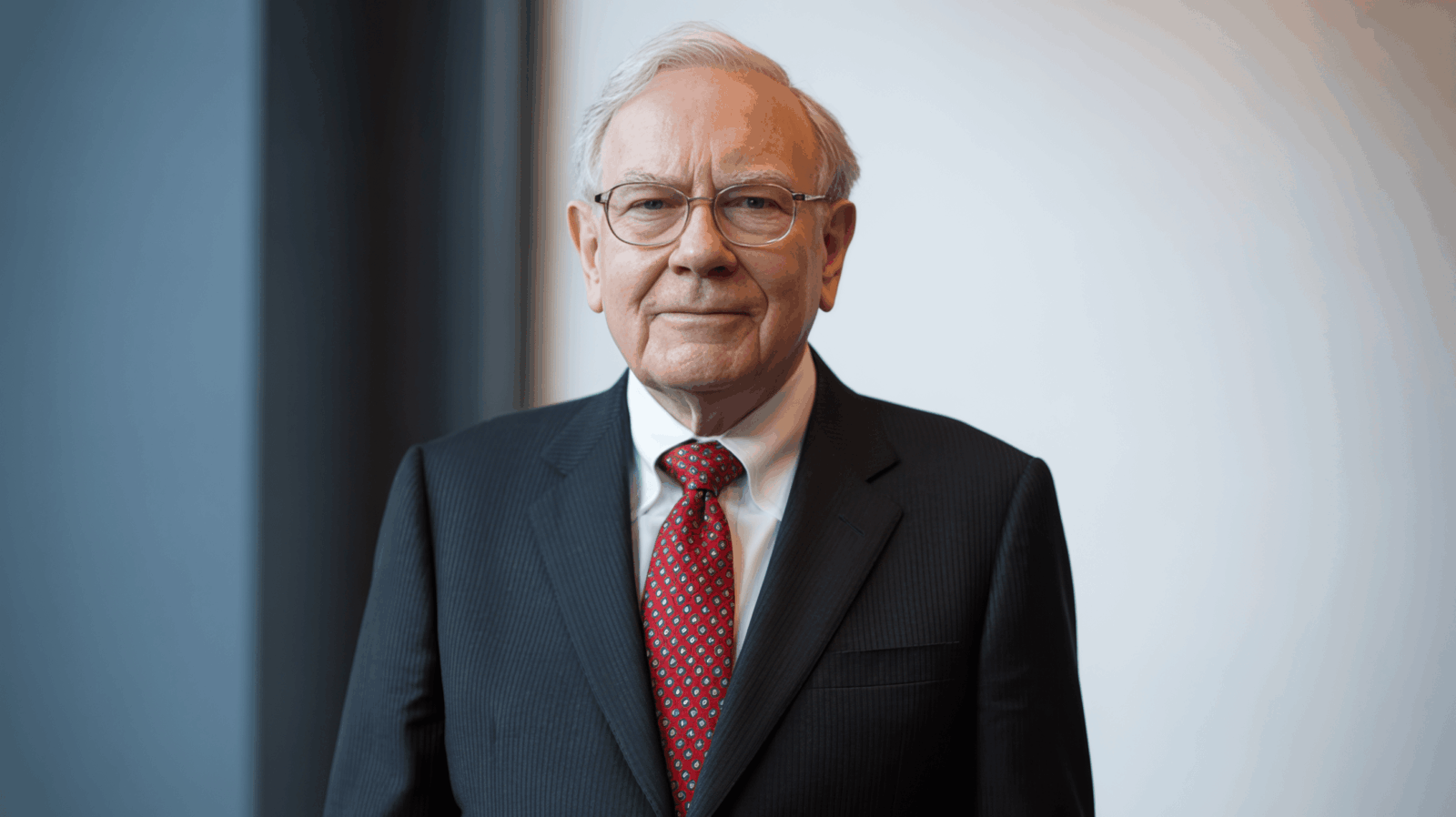
“If you don’t find a way to make money while you sleep, you will work until you die.” – Warren Buffett.
Warren Buffett built one of history’s largest fortunes without working all day. He did it by owning businesses that generated cash for him, whether he was working, sleeping, or eating ice cream at Dairy Queen.
The confusion about passive income in the modern era stems from the promise of instant wealth or cash flow without the upfront work of building a portfolio, system, or business that will generate passive income in the long term. Buffett’s process is different and far more durable.
The internet definition treats passive income as a quick and simple hack for earning money with no effort. Buffett treats it as the long-term result of ownership, patience, and good judgment applied over a lifetime.
His philosophy rests on a simple idea. You front-load the effort by saving, studying, and investing, then let the assets you acquire do the earning for decades while you go about your life.
Buffett once captured this mindset in plainer terms. “Someone’s sitting in the shade today because someone planted a tree a long time ago,” he said. Passive income is the shade of a tree planted long before you ever needed it.
1. The Engine: The Magic of Compounding
“My life has been a product of compound interest.” – Warren Buffett
Buffett has called compound interest the single most important concept in all of finance. Small, consistent returns grow into fortunes when they are given enough time and left undisturbed by anxious hands.
Charlie Munger, Buffett’s business partner for more than six decades, described the waiting itself as a skill most investors never develop. “The big money is not in the buying and the selling, but in the waiting,” he often told investors who asked him for an edge.
This is why Berkshire Hathaway has held certain stocks for decades without selling a single share. Buffett refuses to interrupt the compounding process with unnecessary trades, fees, or short-term capital gains taxes that permanently erase future growth.
In his 1990 letter to shareholders, he wrote: “Lethargy bordering on sloth remains the cornerstone of our investment style.” Doing nothing, when you own the right assets, turns out to be one of the most profitable actions available to any investor. You build wealth passively through compounding gains.
2. The Assets: What Generates Buffett’s Passive Income
Buffett holds the best businesses and does not concern himself with schemes or market trends. His favorite companies produce cash flow that arrives like clockwork, independent of what the stock ticker shows on any given morning.
Dividend payments from businesses like Coca-Cola have sent Berkshire Hathaway quarterly checks since 1988. The original investment has long since been repaid many times over through dividends alone, a textbook example of making money while you sleep.
Buffett looks for what he calls an economic moat, a durable competitive advantage that protects the business from rivals. Without that protection, today’s high profits get competed away tomorrow, and the passive income stream dries up.
See’s Candies, the California confectionery Berkshire purchased in 1972, is the textbook example. The company has generated cumulative pre-tax earnings of well over a billion dollars while requiring very little additional capital investment to keep its stores running.
He favors this kind of business for a reason. “Our favorite holding period is forever,” he wrote in his 1988 letter to shareholders, and such a long time horizon is only possible when a business keeps printing cash year after year without constantly demanding more capital to do it.
3. The Strategy: How to Build Your Own Money Machine
Most people don’t have Buffett’s skill for picking individual businesses. That is why his advice to ordinary investors is radically simple and almost insultingly boring.
In his 2013 shareholder letter, Buffett revealed the instructions he left in his will for the trust benefiting his wife. “My advice to the trustee could not be simpler: Put 10% of the cash in short-term government bonds and 90% in a very low-cost S&P 500 index fund. I believe the trust’s long-term results from this policy will be superior to those attained by most investors, whether pension funds, institutions, or individuals, who employ high-fee managers,” he wrote.
An investor’s circle of competence still matters even with index funds. Buffett has warned for years that “risk comes from not knowing what you are doing,” a warning that applies equally to cryptocurrency, rental real estate, or any other “passive” stream the average person rushes into without studying it first.
If you choose to invest in an S&P 500 index and use a buy-and-hold strategy for passive income growth, you still must know what you are doing and understand the average annual returns to expect, as well as the frequency and size of likely drawdowns.
4. The Psychology: Avoiding the Activity Trap
The hardest part of passive investing is staying passive when it feels wrong. Markets drop, talking heads on financial networks panic, and the urge to “do something” grows overwhelming for most retail investors.
Buffett has warned for decades that activity itself is often the enemy of returns. He once observed that “The stock market is designed to transfer money from the active to the patient,” a single sentence that captures why most investors underperform the index they chase.
Fees quietly kill passive income over the long term. Every percent lost to management costs, trading commissions, or short-term capital gains taxes compounds against you for the rest of your life and shows up as a much smaller nest egg at the end.
Conclusion
Passive income in Buffett’s framework is not the absence of work. It is the delayed reward for disciplined, active decisions you made years or even decades earlier.
The goal is not simply a bigger number in a brokerage account. The goal is ownership of your own time, the freedom to choose how you spend your days without a paycheck dictating them.
Start small, stay consistent, and let compounding do its patient work. The snowball rolls slowly at first, but given enough hill and enough time, nothing can stop it.
For more passive income ideas, check out this article: The Best 5 Passive Income Streams, According to Robert Kiyosaki.
PakarPBN
A Private Blog Network (PBN) is a collection of websites that are controlled by a single individual or organization and used primarily to build backlinks to a “money site” in order to influence its ranking in search engines such as Google. The core idea behind a PBN is based on the importance of backlinks in Google’s ranking algorithm. Since Google views backlinks as signals of authority and trust, some website owners attempt to artificially create these signals through a controlled network of sites.
In a typical PBN setup, the owner acquires expired or aged domains that already have existing authority, backlinks, and history. These domains are rebuilt with new content and hosted separately, often using different IP addresses, hosting providers, themes, and ownership details to make them appear unrelated. Within the content published on these sites, links are strategically placed that point to the main website the owner wants to rank higher. By doing this, the owner attempts to pass link equity (also known as “link juice”) from the PBN sites to the target website.
The purpose of a PBN is to give the impression that the target website is naturally earning links from multiple independent sources. If done effectively, this can temporarily improve keyword rankings, increase organic visibility, and drive more traffic from search results.
