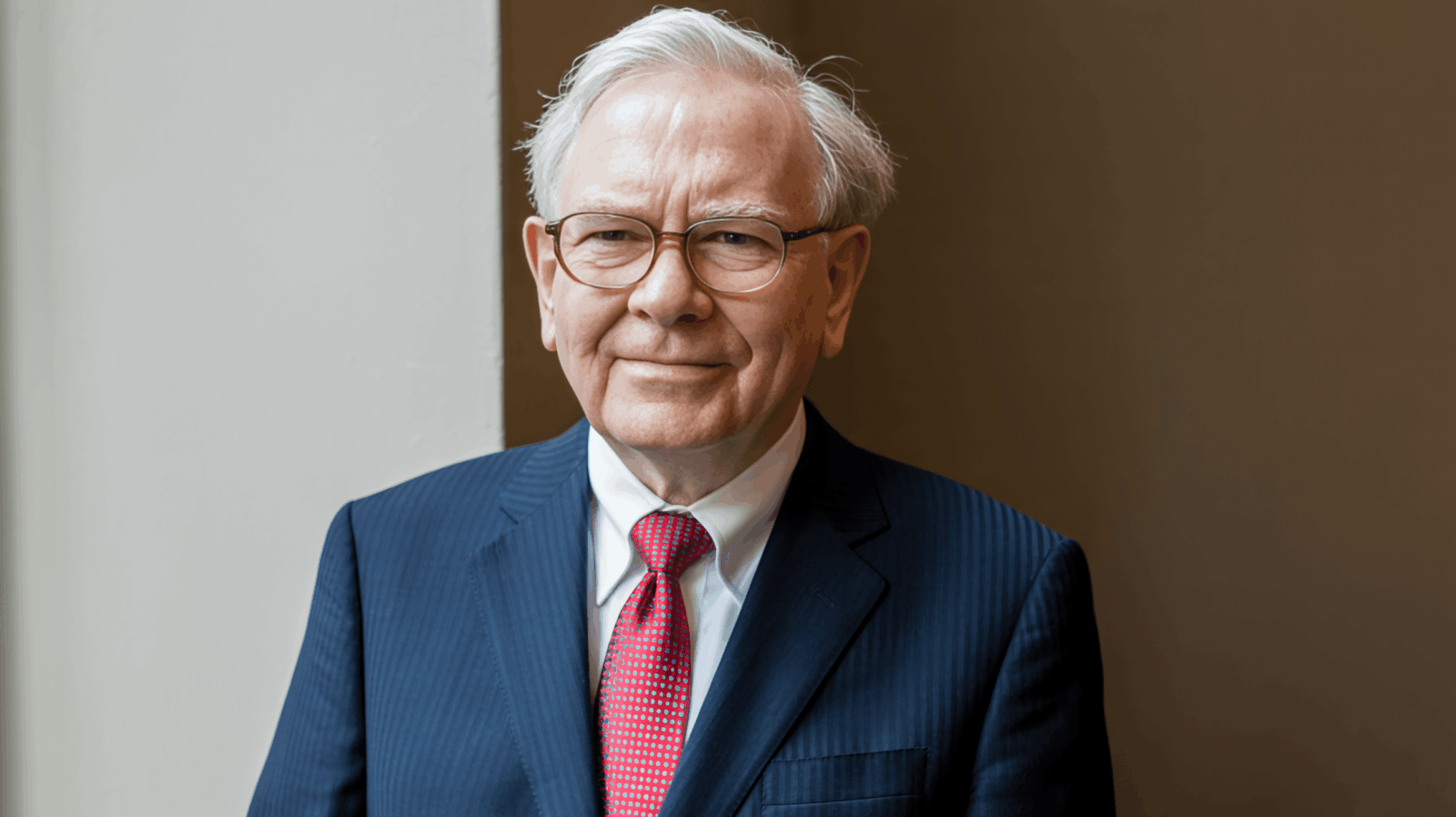
Warren Buffett didn’t build Berkshire Hathaway into one of the world’s most valuable companies by guessing. He applied a disciplined, repeatable framework to every business evaluation.
The fifteen principles below, drawn from his shareholder letters, speeches, and interviews, form the checklist behind nearly every major investment decision he ever made.
1. Know Your Circle of Competence
“Risk comes from not knowing what you’re doing.” — Warren Buffett, 1994 Berkshire Hathaway Annual Meeting.
Buffett never confused activity with expertise. Before analyzing any company, he first asked whether he truly understood the industry, the business model, and the competitive forces at work.
Investing outside your circle of competence isn’t bold. It’s simply uninformed risk wearing a confident disguise.
2. Only Invest in What You Understand
“Never invest in a business you can’t understand.” — Warren Buffett
This principle flows directly from the first. Understanding a business means being able to explain how it makes money, why customers keep returning, and what could realistically threaten it.
If you can’t explain it clearly, you probably don’t understand it well enough to own it.
3. Look for a Durable Competitive Advantage
“The most important thing to evaluate is whether a company has a durable competitive advantage.” — Warren Buffett, 2007 Berkshire Hathaway Annual Meetin.g
A business that can’t defend its market position will eventually see its profits competed away. Buffett wanted companies that could sustain strong returns for decades, not just a few good years.
Durability is the word that separates great businesses from ordinary ones.
4. Find the Economic Moat
“In business, I look for economic castles protected by unbreachable ‘moats.’” — Warren Buffett, 1995 Berkshire Hathaway Shareholder Letter
The moat is whatever keeps competitors from taking a company’s customers. It could be brand loyalty, cost advantages, network effects, or regulatory protection.
Without a moat, even a great business becomes vulnerable the moment a well-funded competitor arrives.
5. Require Consistent Earnings Power
“We prefer businesses earning good returns on equity while employing little or no debt.” — Warren Buffett, 1987 Berkshire Hathaway Shareholder Letter.
Buffett avoided businesses with erratic earnings. He wanted companies that generated reliable profits year after year, regardless of broader economic conditions.
Consistency signals a real competitive advantage. Volatility often signals that a company’s profits depend more on luck than on structure.
6. Demand High Return on Equity
“The primary test of managerial economic performance is the achievement of a high earnings rate on equity capital.” — Warren Buffett, 1983 Berkshire Hathaway Shareholder Letter.
Return on equity shows you how effectively management is using shareholders’ money. A high, sustained return on equity without excessive debt is one of the clearest signals of a truly excellent business.
It also tells you the business doesn’t need constant capital infusions to grow.
7. Insist on Honest, Rational Management
“We look for intelligence, we look for initiative or energy, and we look for integrity.” — Warren Buffett, University of Nebraska speech (1991)
Numbers only tell part of the story. Buffett placed enormous weight on the character of the people running a business before he ever considered putting money in.
He believed integrity was non-negotiable. Without it, intelligence and energy make a dishonest manager more dangerous.
8. Test Management Under Pressure
“When a management with a reputation for brilliance tackles a business with a reputation for bad economics, it is the reputation of the business that remains intact.” — Warren Buffett, 1980 Berkshire Hathaway Shareholder Letter.
Buffett was deeply skeptical of the idea that brilliant management could rescue a structurally flawed business. The economics of the industry would almost always win in the end.
He wanted management teams who had proven themselves in businesses already sound.
9. Favor Simple, Understandable Businesses
“Your goal as an investor should simply be to purchase, at a rational price, a part interest in an easily-understandable business whose earnings are virtually certain to be materially higher five, ten, and twenty years from now.” — Warren Buffett, 1996 Berkshire Hathaway Shareholder Letter
Complexity is a red flag. Hard businesses to explain are often hard to value and hard to monitor once you own them.
Buffett preferred businesses that were simple enough for him to track the essential variables without needing a large team of analysts watching every move.
10. Verify Pricing Power
“The single most important decision in evaluating a business is pricing power.” — Warren Buffett, 2010 Financial Crisis Inquiry Commission testimony.
A business that can raise prices without losing customers has genuine pricing power. That ability is one of the most reliable indicators of a strong competitive position.
Without it, a company is always vulnerable to inflation, rising input costs, and relentless pressure on its margins.
11. Avoid Excessive Debt
“Only when the tide goes out do you discover who’s been swimming naked.” — Warren Buffett, 2001 Berkshire Hathaway Shareholder Letter
Debt magnifies both gains and losses. Buffett consistently avoided companies that relied heavily on borrowed money to generate their returns.
High debt loads leave businesses fragile in downturns. The companies that survive economic crises are almost always the ones that didn’t need the tide to stay high.
12. Require Predictable Long-Term Economics
“We like businesses we can understand, with favorable long-term prospects.” — Warren Buffett, 1996 Berkshire Hathaway Shareholder Letter.
Predictability mattered because Buffett was making commitments measured in decades, not quarters. He needed reasonable confidence that the business would remain relevant and profitable well into the future.
Businesses operating in rapidly changing industries rarely meet this standard.
13. Always Apply a Margin of Safety
“Price is what you pay. Value is what you get.” — Warren Buffett, 2008 Berkshire Hathaway Shareholder Letter.
Buffett inherited this principle from his mentor Benjamin Graham. Paying less than a business is worth creates a buffer against mistakes, unforeseen problems, and plain bad luck.
No valuation is ever perfectly accurate. The margin of safety is what protects you when your assumptions turn out to be slightly wrong.
14. Buy Great Businesses, Not Just Cheap Ones
“It’s far better to buy a wonderful company at a fair price than a fair company at a wonderful price.” — Warren Buffett, 1989 Berkshire Hathaway Shareholder Letter.
Early in his career, Buffett was drawn to stocks that were statistically cheap. Charlie Munger helped him evolve toward paying fair prices for exceptional businesses instead.
A mediocre business bought cheaply will still deliver mediocre results over time. A great business compounds wealth for decades.
15. Commit to a Long-Term Holding Mindset
“Our favorite holding period is forever.” — Warren Buffett, 1988 Berkshire Hathaway Shareholder Letter.
Buffett’s edge was never about predicting short-term price movements. It came from identifying excellent businesses and holding them long enough for compounding to do its work.
The longer you hold a great business, the more the economics work in your favor and the less the daily noise of the market matters.
Conclusion
These fifteen principles aren’t complicated. They are, however, demanding. Most investors know them intellectually but abandon them emotionally the moment markets turn volatile or a compelling narrative overrides their discipline.
Buffett’s real advantage was never superior information or exclusive access. It was the consistency with which he applied this checklist, year after year, in good markets and bad. That discipline is available to any investor willing to adopt it and patient enough to stick with it.
PakarPBN
A Private Blog Network (PBN) is a collection of websites that are controlled by a single individual or organization and used primarily to build backlinks to a “money site” in order to influence its ranking in search engines such as Google. The core idea behind a PBN is based on the importance of backlinks in Google’s ranking algorithm. Since Google views backlinks as signals of authority and trust, some website owners attempt to artificially create these signals through a controlled network of sites.
In a typical PBN setup, the owner acquires expired or aged domains that already have existing authority, backlinks, and history. These domains are rebuilt with new content and hosted separately, often using different IP addresses, hosting providers, themes, and ownership details to make them appear unrelated. Within the content published on these sites, links are strategically placed that point to the main website the owner wants to rank higher. By doing this, the owner attempts to pass link equity (also known as “link juice”) from the PBN sites to the target website.
The purpose of a PBN is to give the impression that the target website is naturally earning links from multiple independent sources. If done effectively, this can temporarily improve keyword rankings, increase organic visibility, and drive more traffic from search results.
